

Here are 4 Secret Rules for Using Sijambo Correctly. If you have ever tried learning Swahili or speaking with native speakers, you’ve probably realized very quickly that greetings are not just polite filler—they are the literal foundation of social interaction.
Skipping a proper greeting to dive straight into business isn’t just viewed as being in a hurry; it comes across as cold. Among the essential terms you’ll hear and use daily, one word stands out as a fundamental cornerstone: Sijambo.
Table of Contents
Let’s dissect why this single word matters so much, break down the four essential sentences containing it, examine how to pronounce them cleanly, and look at when and how to use them to sound natural and confident.
What Does “Sijambo” Actually Mean?
To understand why Sijambo is so critical, you need to break down its anatomical structure. It isn’t just a generic equivalent of “I am fine.”
In Swahili:
- Jambo means matter, issue, or problem.
- Si- is the first-person negative prefix (I do not / I have no).
When you say Sijambo, you are literally stating: “I have no issues” or “Nothing is wrong with me.”
In East African culture, conversation starts by establishing peace and well-being. Before asking for directions, pricing, or jumping into work, checking in on each other’s state of peace comes first. Responding with Sijambo signals that you are centered, healthy, and ready to connect.
Now let’s dive in and discover those 4 secret rules for using Sijambo correctly
4 Secret Rules for Using Sijambo Correctly
Here is how to use the exact four key Sijambo phrases in real, everyday conversation:
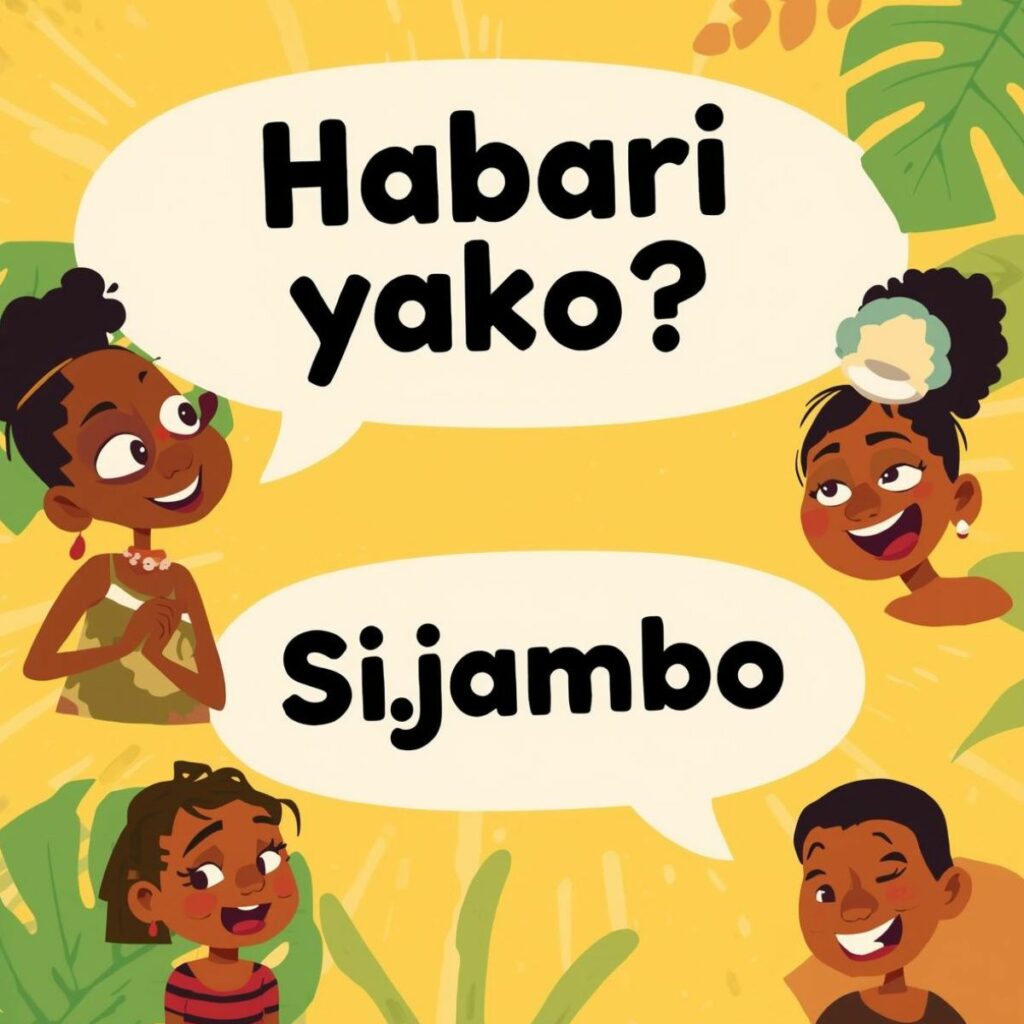
Sentence 1: “Habari yako? Sijambo.”
- Pronunciation: Listen to the audio below.👇
- English Translation: “How are you? I am fine.”
- Why it’s important: This is the standard exchange you will hear in 80% of casual daily encounters. Habari yako? asks for your news/status, and Sijambo provides the immediate reassurance that all is well.
- When & How to Use: Use this whenever someone greets you on the street, at a shop, or when starting a conversation online or in person.
Sentence 2: “Marafiki waliposalimiana: mmoja alisema sijambo.”

- Pronunciation: Listen to the audio below.👇
- English Translation: “When the friends greeted each other: one said I am fine.”
- Why it’s important: This sentence highlights how sijambo functions within a narrative or descriptive context. It illustrates mutual greeting dynamics between peers.
- When & How to Use: This structure is commonly used in writing, storytelling, or reading comprehension exercises to describe warm interactions between friends.
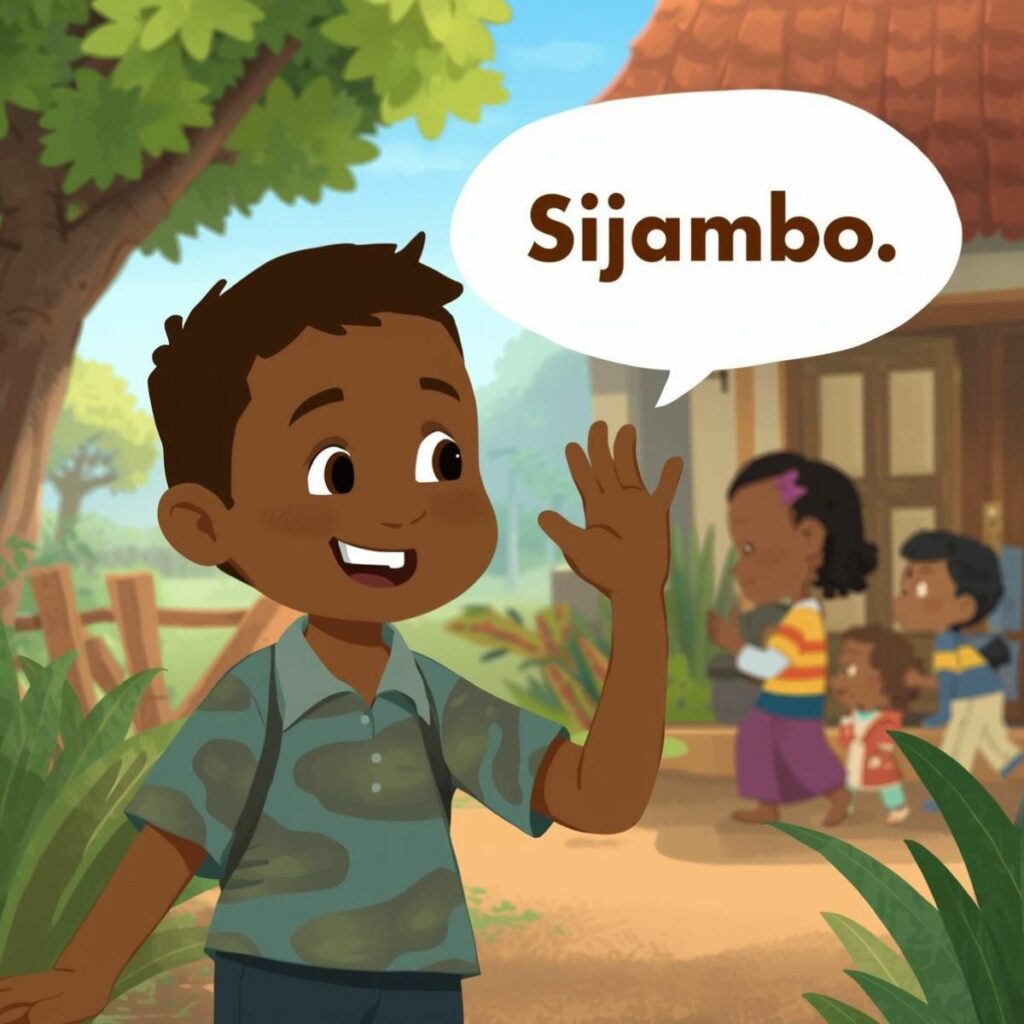
Sentence 3: “Nikiwa salama: huwa nasema sijambo.”
- Pronunciation: Listen to the audio below.👇
- English Translation: “When I am safe and well: I usually say I am fine.”
- Why it’s important: This phrase links your internal state of safety (salama) with your verbal response (sijambo). It underscores that sijambo is reserved for when you are genuinely peaceful and unharmed.
- When & How to Use: Use this expression when explaining your habits, personal principles, or routine responses during a conversation about well-being.
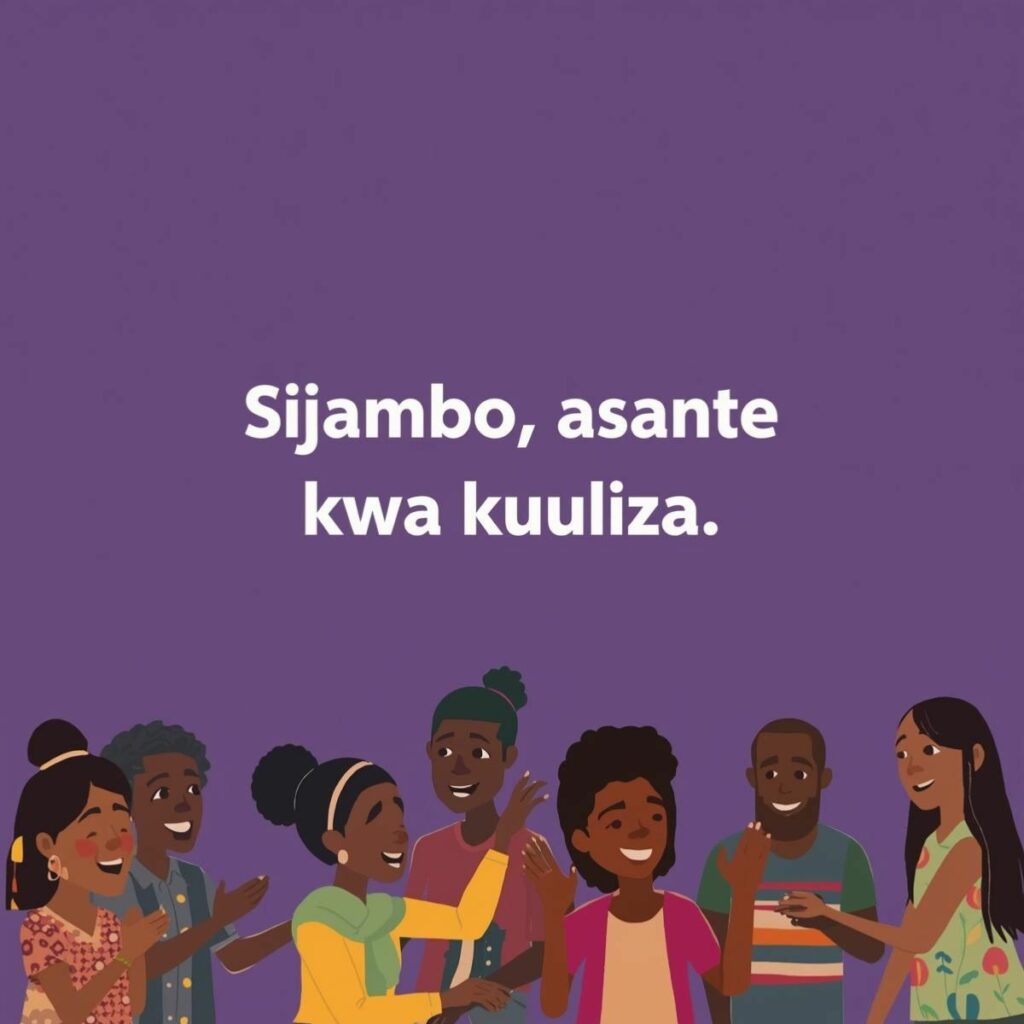
Sentence 4: “Sijambo: asante kwa kuuliza.”
- Pronunciation: Listen to the audio below.👇
- English Translation: “I am fine: thank you for asking.”
- Why it’s important: Adding asante kwa kuuliza elevates a basic answer into a polite, respectful demonstration of gratitude. It acknowledges the speaker’s care in checking up on you.
- When & How to Use: Use this when speaking with elders, superiors, clients, or anyone to whom you want to express extra courtesy.
Why Politeness Wins in Swahili Culture
Language isn’t just syntax and grammar; it’s context. In Swahili-speaking societies, diving straight into a query without greeting the other person feels transactional and abrasive.
When you take 10 seconds to say “Habari yako? Sijambo: asante kwa kuuliza,” you immediately disarm the room. You show respect for the person standing across from you, building instant rapport and trust whether you’re buying produce, asking for help, or chatting with friends.
Summary Checklist
| Swahili Sentence | Context / Best Use | Pronunciation Tip |
| Habari yako? Sijambo. | Standard daily exchange | Emphasize ha-BA-ri & see-JAM-bo |
| Marafiki waliposalimiana: mmoja alisema sijambo. | Storytelling / Narrative | Stress sa-li-mi-A-na |
| Nikiwa salama: huwa nasema sijambo. | Describing personal state/habits | Clear ni-KI-wa & sa-LA-ma |
| Sijambo: asante kwa kuuliza. | High courtesy & formal respect | Soft double ‘u’ in u-u-LI-za |
Mastering these four sentences will make your Swahili sound natural, polite, and authentic!
We hope these 4 Secret Rules for Using Sijambo Correctly in Swahili will help you add to your vocabulary. You can also learn 5 Powerful Ways to Master Swahili Greetings.
Please reach out to me by clicking my initials below.👇To learn more in private.
Until next time, Happy Learning.