
In this article, we are going to see 5 Powerful Ways to Master Swahili Greetings. So greetings, or salamu in Swahili, are far more than simple words of hello and goodbye. They form the heart of social interaction in many Swahili-speaking communities across East Africa, including Kenya, Tanzania, Uganda, Rwanda, Burundi, and parts of the Democratic Republic of Congo.
Table of Contents
Greetings reflect values of respect, warmth, politeness, and community. In Swahili culture, how you greet someone often matters as much as what you say, because it shows your attitude, upbringing, and appreciation for others.
5 Powerful Ways to Master Swahili Greetings
1. Salamu
The general word for greeting in Swahili is salamu. When people say salamu, they are referring to any form of greeting, whether formal or informal. In daily life, salamu is not rushed or treated casually. In villages, towns, schools, workplaces, and homes, people take time to exchange greetings before discussing business, asking questions, or making requests. This practice strengthens relationships and builds trust.
2. Habari za Asubuhi
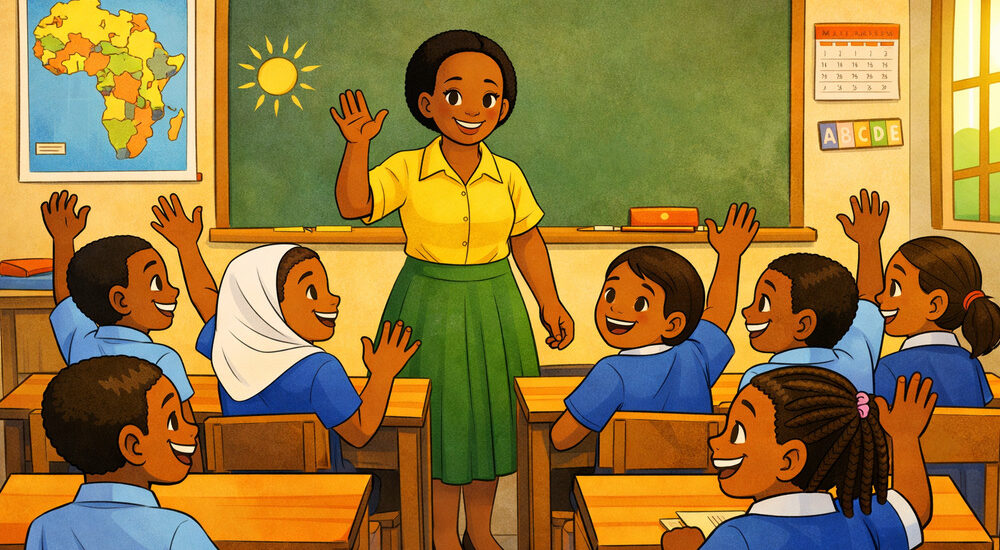
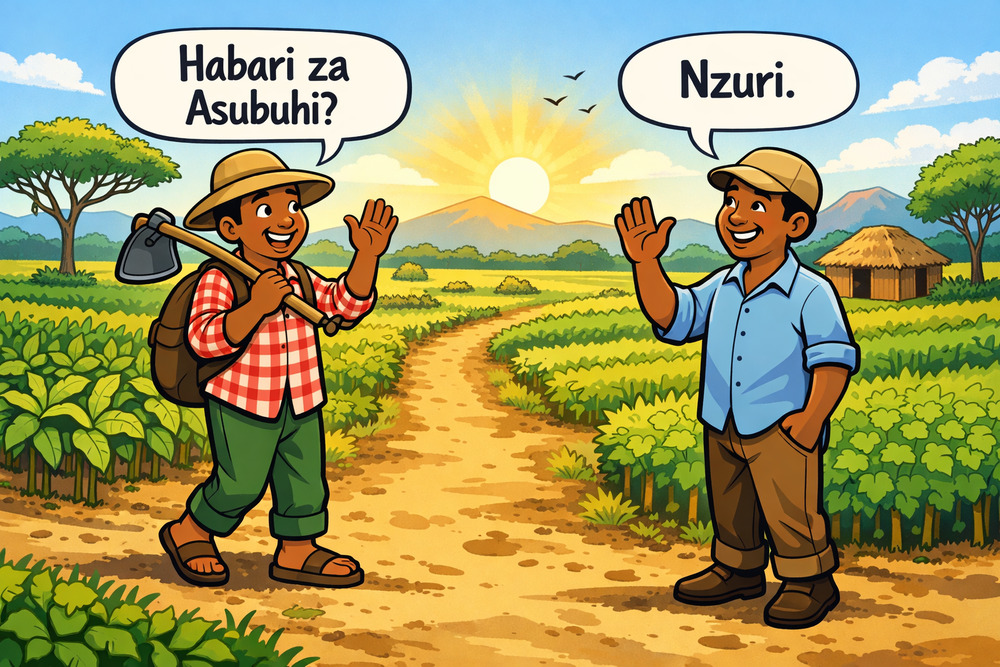
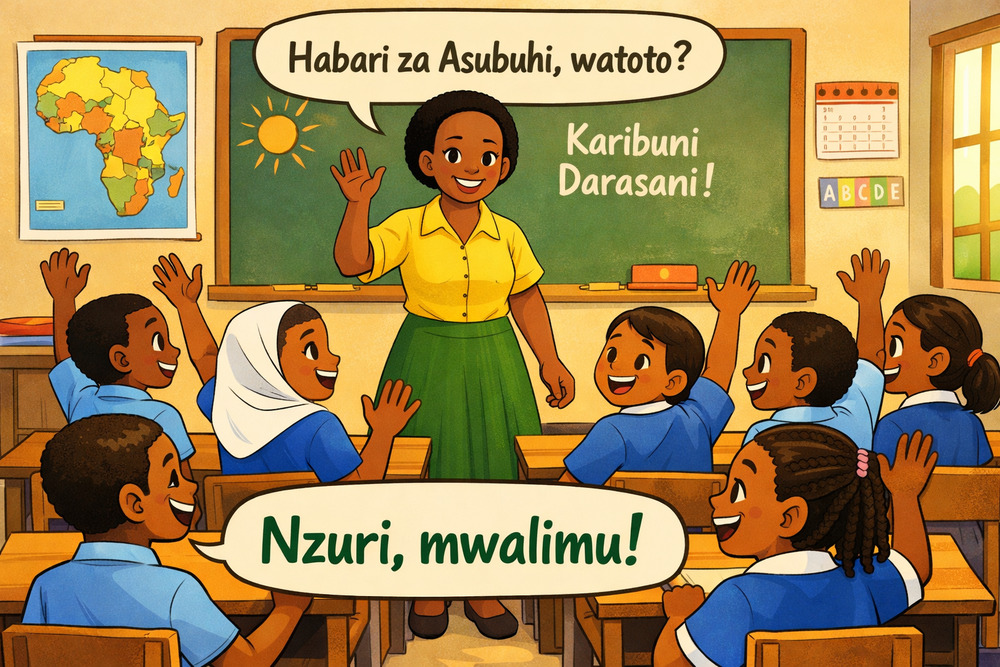
In the early morning, when the sun is just rising, people greet each other with Habari za Asubuhi, which means “Good morning.” A farmer heading to his field might meet a neighbor along the path and say, “Habari za Asubuhi?” The neighbor responds, “Nzuri,” meaning “Good.” In schools, teachers greet students with Habari za Asubuhi, watoto? (Good morning, children?), and students reply in chorus, “Nzuri, mwalimu!” (Good, teacher!).
In offices, colleagues exchange this greeting before settling at their desks. Even in markets, traders greet their first customers with Habari za Asubuhi as a sign of friendliness and readiness for the day.
3. Habari za Mchana
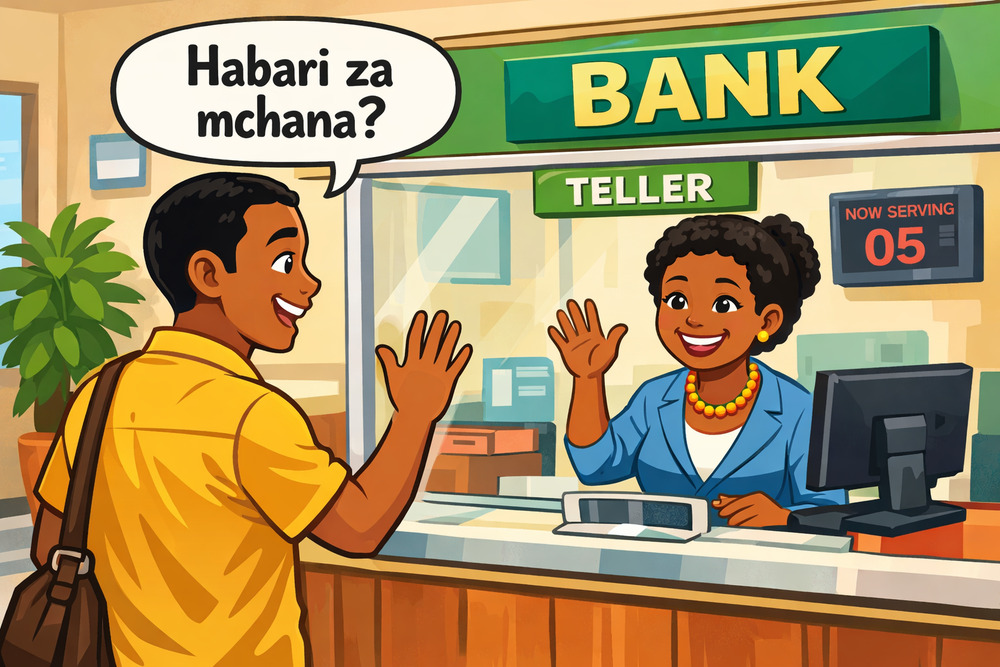
As the day progresses and the sun reaches its peak, greetings change to match the time. Around midday and early afternoon, people say Habari za mchana, meaning “Good afternoon.” This greeting is commonly heard in workplaces, shops, and public spaces. A person entering a bank might greet the teller with, “Habari za mchana?” before explaining their transaction. In restaurants, waiters may welcome customers with this phrase.
Children returning from school might greet elders sitting outside with Habari za mchana, bibi (Good afternoon, grandmother). This shows politeness and awareness of time, which is an important cultural trait.
4. Habari za Jioni
As evening approaches and the sky begins to darken, the greeting shifts to Habari za Jioni, meaning “Good evening.” This greeting is often used when people are returning home from work or gathering for social activities. Neighbors sitting outside their houses may greet each other with Habari za Jioni as they chat about their day.
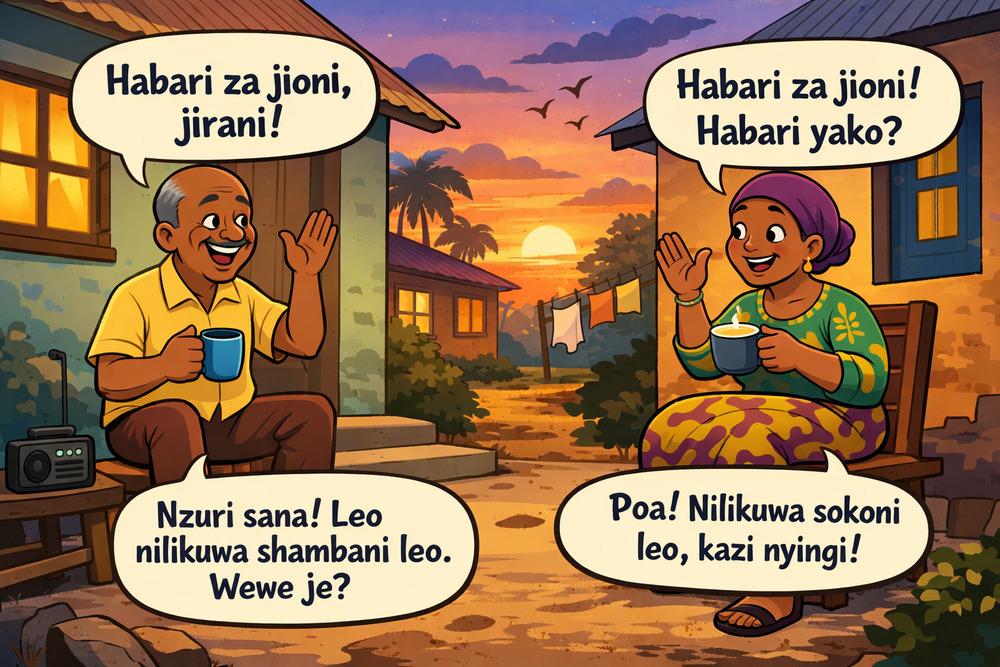
In family settings, younger members greet their parents or grandparents with this phrase when they arrive home. In religious settings, such as mosques or churches, people also use this greeting before or after prayers.
5. Shikamoo
Beyond time-based greetings, Swahili culture places special emphasis on respect for elders through the word Shikamoo. This is one of the most important and distinctive greetings in the Swahili language. Shikamoo literally means “I hold your feet,” but culturally it means “I respectfully greet you.” It is used by younger people when greeting elders, including parents, grandparents, older relatives, teachers, and respected community members. It is never used among peers or by older people toward younger ones.
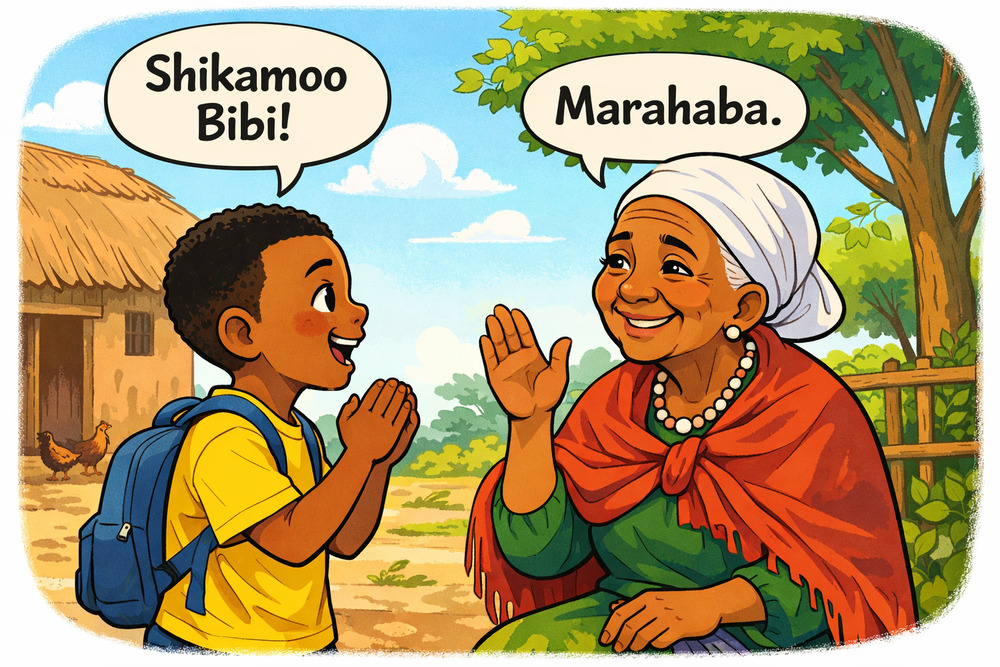
For example, when a child sees their grandmother, they may say, “Shikamoo, bibi.” The grandmother responds with “Marahaba,” which means “I accept your respect.” In many families, children are taught from a very young age to use Shikamoo whenever they meet an elder, especially for the first time in a day. In traditional settings, some children even bow slightly or lower their heads while saying it as a sign of humility.
In schools, students may say Shikamoo to their teachers, especially in rural or traditional communities. In villages, young people greet village elders with this word as they pass by. Even in urban areas, many families still preserve this custom. The use of Shikamoo helps maintain social order, reinforces respect across generations, and strengthens cultural identity.
In everyday activities, Swahili greetings shape how people interact. In markets, before bargaining over prices, buyers and sellers often exchange greetings first. A customer might say, “Habari za mchana?” and the seller replies warmly before starting business. In public transport, passengers may greet the driver with Habari za Asubuhi as they board a bus or matatu. In workplaces, greetings create a friendly atmosphere and reduce tension among colleagues.
In social gatherings, greetings set the tone for conversation. When guests arrive at a party, they greet the host with appropriate words depending on the time of day. Younger guests may also add Shikamoo if the host is an elder. This makes the host feel honored and respected.
Swahili greetings also reflect the communal nature of society. Unlike in some cultures where people may ignore strangers, in Swahili-speaking communities, it is common to greet even people you do not know, especially in rural areas. A traveler passing through a village will often hear “Habari za safari?” (How is your journey?) as a friendly greeting.
In conclusion, greetings in Swahili are not just words; they are expressions of culture, respect, and human connection. From Habari za Asubuhi in the morning to Habari za Jioni in the evening, these greetings structure daily life and interactions. The special use of Shikamoo highlights the deep value placed on elders and tradition. Through salamu, Swahili speakers build relationships, show kindness, and keep their cultural heritage alive in everyday life.
So in this article, you have seen how to pronounce those words in Swahili Language. Enjoy the practice. If you want to learn about the lifestyle and culture of Swahili people, visit our lifestyle page.
Until next time it’s me
AVM.