

We saw in the previous article that greetings are very important in the Swahili language and culture. Let’s see 7 positive Swahili greetings You Must Know. These greetings are used every day at home, in school, at work, in the market, and in the community.
Table of Contents
In Swahili-speaking areas such as Kenya, Tanzania, Uganda, and parts of Rwanda, Burundi, and Congo, people believe that good greetings show respect, kindness, and good manners. Greeting someone properly can make them feel happy, valued, and respected.
7 Positive Swahili Greetings You Must Know
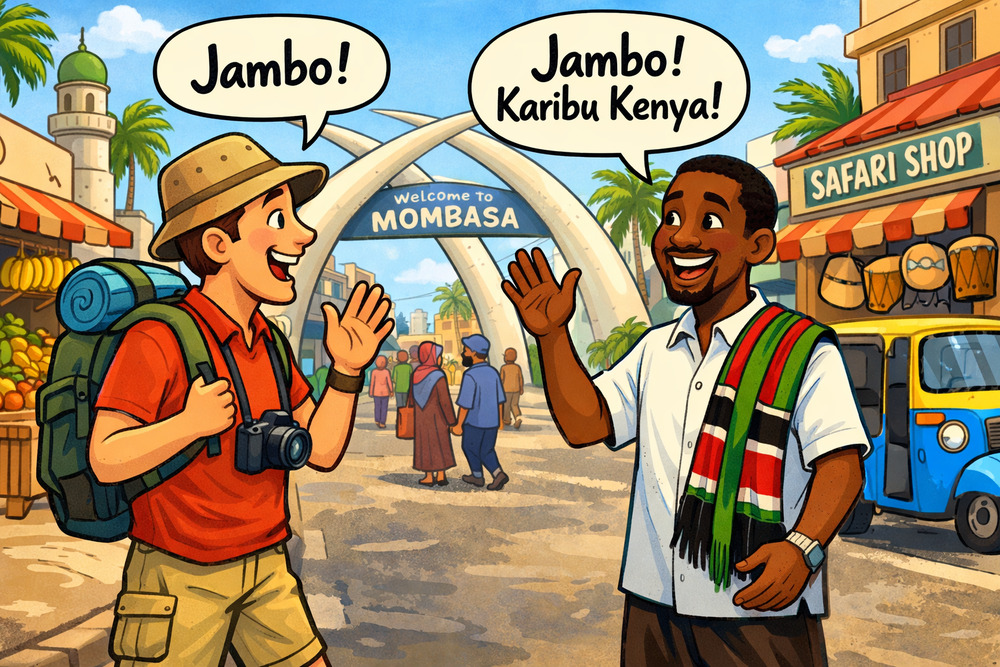
Here are 7 positive swahili greetings you must know and the one of the most common greetings is Jambo, which means “Hello.” It is polite and friendly. People use it when meeting someone for the first time or when speaking to someone they respect. For example, a tourist walking in Mombasa might greet a local person by saying, “Jambo!” The local person may smile and reply, “Jambo! Karibu Kenya!” meaning “Hello! Welcome to Kenya!”
Another similar greeting is Mambo, which is more casual and often used among friends. Two young people meeting on the street might greet each other like this:
Person 1: “Mambo?”
Person 2: “Poa! Na wewe?” (Cool! And you?)
Person 1: “Poa sana!” (Very cool!)
In schools, students often greet each other with “Jambo” or “Mambo” before classes begin. Teachers may also greet students kindly to create a friendly learning environment.
When someone arrives at a place, the word Karibu, meaning “Welcome,” is very important. This word shows hospitality and kindness. If a guest visits a home, the host might say:
Host: “Karibu! Tafadhali kaa.” (Welcome! Please sit.)
Guest: “Asante.” (Thank you.)
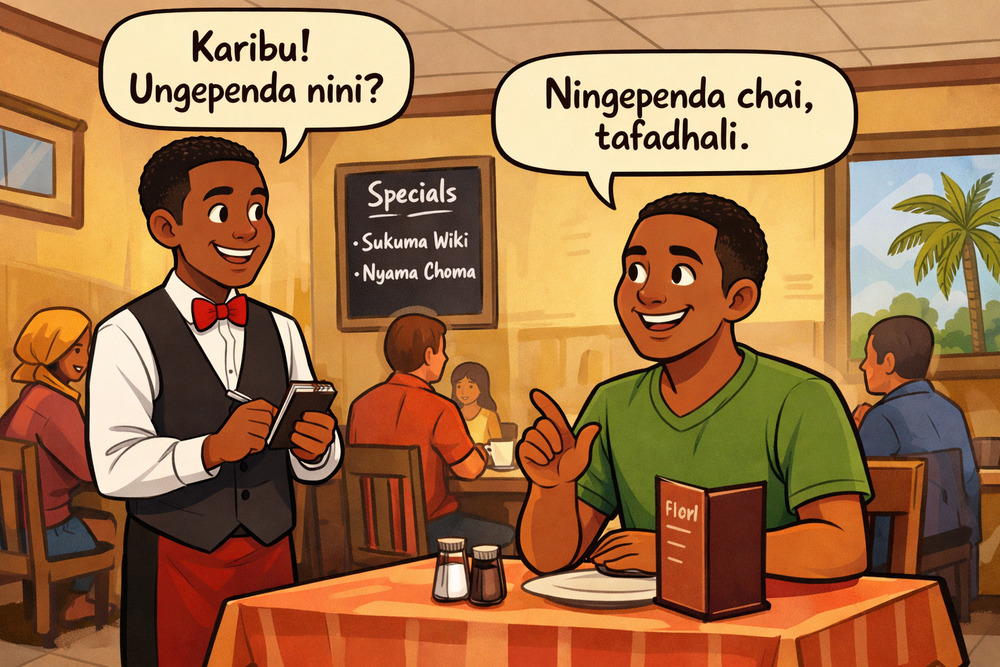
In restaurants, waiters use this word a lot. For example:
Waiter: “Karibu! Ungependa nini?” (Welcome! What would you like?)
Customer: “Ningependa chai, tafadhali.” (I would like tea, please.)
In offices, receptionists may say:
Receptionist: “Karibu. Unaweza kukaa hapa.” (Welcome. You can sit here.)
Gratitude is very important in Swahili culture, and people express it using the word Asante, meaning “Thank you.” People say this in many situations. If someone helps you, you say “Asante.” If someone serves you food, you say “Asante.” If a bus conductor gives you change, you say “Asante.”
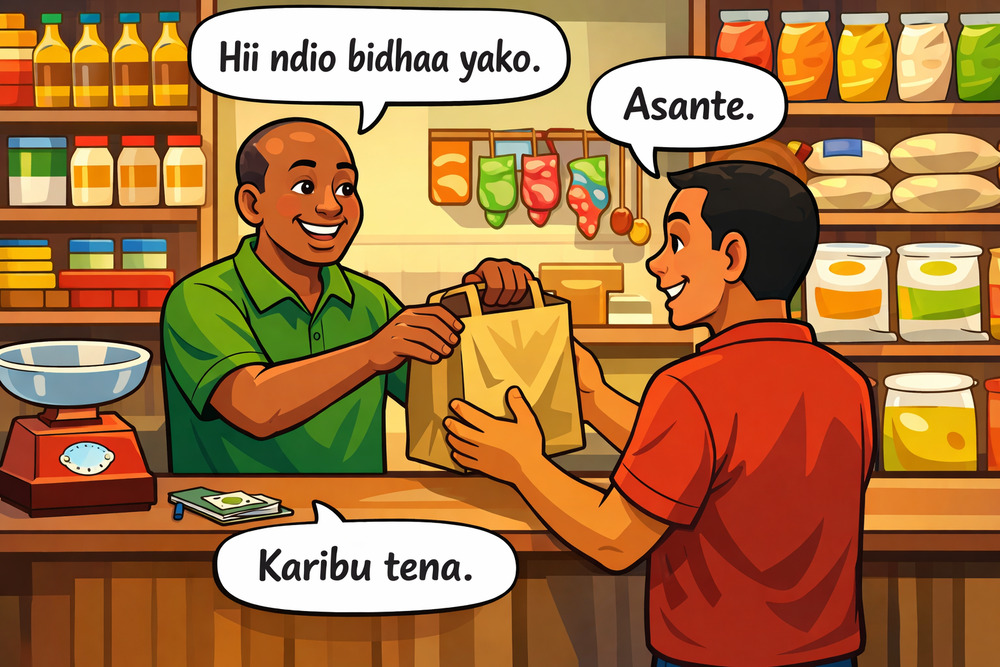
For example, in a shop:
Shopkeeper: “Hii ndio bidhaa yako.” (Here is your item.)
Customer: “Asante.”
Shopkeeper: “Karibu tena.” (You are welcome again.)
When someone does something very helpful or generous, people say Asante sana, meaning “Thank you very much.” For instance, if a neighbor helps you carry heavy bags, you might say:
You: “Asante sana kwa msaada wako.” (Thank you very much for your help.)
Neighbor: “Karibu!” (You are welcome!)

In formal events, like meetings or speeches, people often end by saying “Asante sana” to thank the audience.
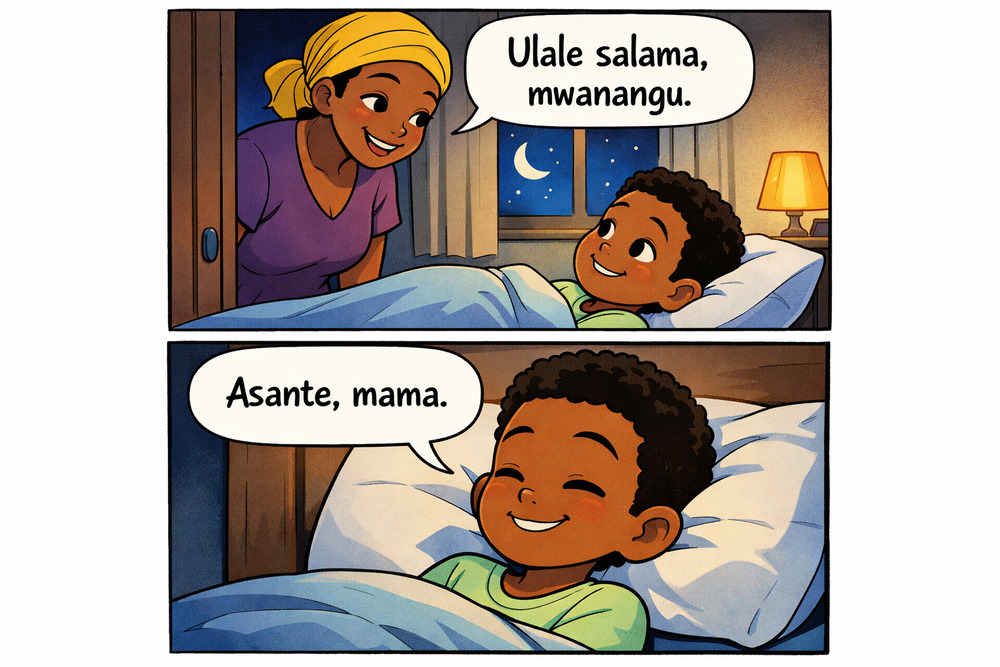
At night, when people are preparing to sleep, they use the phrase Ulale salama, which means “Good night” or “Sleep well.” Parents commonly say this to their children. For example:
Mother: “Ulale salama, mwanangu.” (Sleep well, my child.)
Child: “Asante, mama.”
Friends may also say this when ending a phone call late at night:
Friend 1: “Ulale salama.”
Friend 2: “Asante, wewe pia.” (Thank you, you too.)
Another kind and loving phrase is Njozi njema, meaning “Sweet dreams.” This is often said after “Ulale salama.” For example:
Sister: “Ulale salama, njozi njema!”
Brother: “Asante!”
Couples also use this phrase to show care and affection before sleeping.
When it is time to leave or part ways, people say Kwaheri, meaning “Goodbye.” This word is used in many situations. At a bus station, a family might say goodbye to a traveler like this:
Mother: “Kwaheri, mwanangu. Safiri salama.” (Goodbye, my child. Travel safely.)
Son: “Kwaheri, mama.”
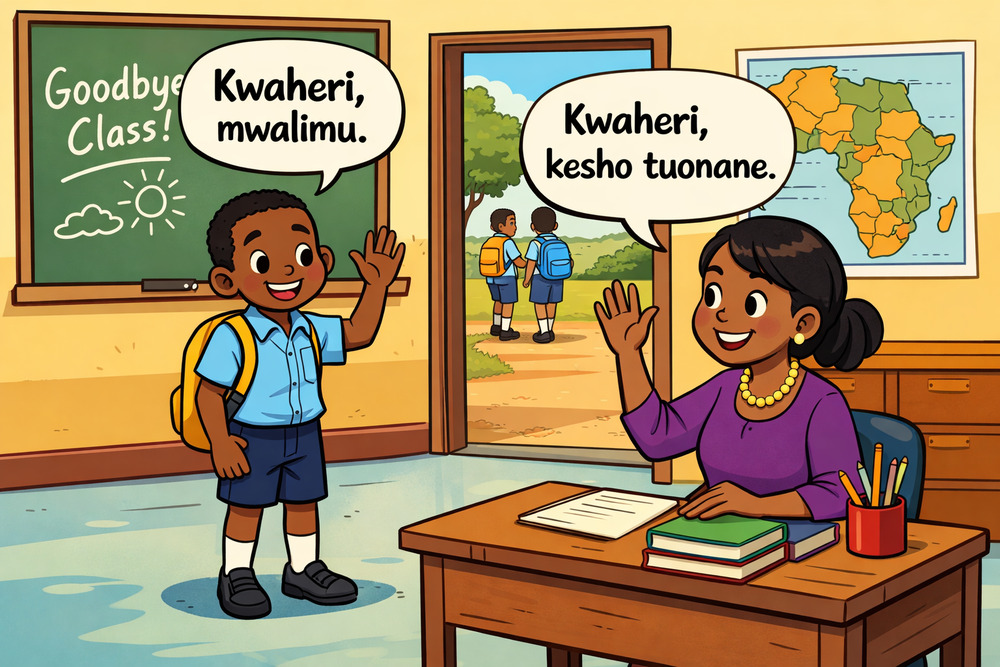
In schools, students say “Kwaheri” to their teachers at the end of the day:
Student: “Kwaheri, mwalimu.”
Teacher: “Kwaheri, kesho tuonane.” (Goodbye, see you tomorrow.)
In daily life, these greetings connect people and make interactions smoother and more friendly. A normal day might look like this:
In the morning, John leaves his house and meets his neighbor.
John: “Jambo!”
Neighbor: “Jambo! Habari?” (Hello! How are you?)
John: “Nzuri!” (Good!)
He then goes to a shop.
Shopkeeper: “Karibu!”
John: “Asante.”
After buying bread, John says: “Asante.”
Shopkeeper: “Karibu tena.”
In the afternoon, John visits a friend.
Friend: “Karibu, rafiki!” (Welcome, my friend!)
John: “Asante sana.”
They drink tea together and chat happily.
In the evening, John returns home to his family. His mother serves dinner.
John: “Asante kwa chakula.” (Thank you for the food.)
Mother: “Karibu.”
At night, before going to bed, John’s mother says:
Mother: “Ulale salama, njozi njema.”
John: “Asante, mama.”
The next morning, John leaves for work and says to his family:
John: “Kwaheri!”
Family: “Kwaheri, kazi njema!” (Goodbye, have a good day at work!)
Through all these examples, it is clear that Swahili greetings are not just words—they are a way of life, they are the 7 positive swahili greetings you must know. They show respect, kindness, love, and unity. Whether saying Jambo, Karibu, Asante, Kwaheri, Ulale salama, or Njozi njema, each word helps people connect and live peacefully together.
We are glad that you have benefited with learning this 7 Positive Swahili Greetings You Must Know. Continue learning with us, and you will truly benefit.
Until next time it’s me