
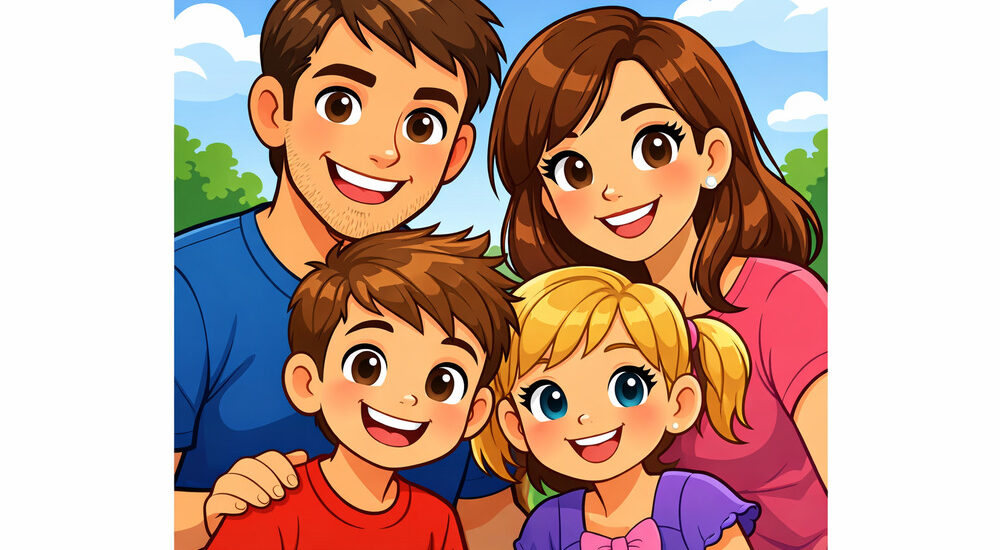
We all love our family members. Today, we are going to Learn 7 Incredible Swahili Family Terms. We will learn how to use them. In Swahili culture, the words we use for “Man,” “Woman,” “Father,” or “Sister” are not just labels; they are keys to identity and communal respect.
When you speak Swahili, you aren’t just communicating facts; you are navigating a social map where everyone is “family.” Whether you are in the bustling streets of Dar es Salaam or a quiet village in Zanzibar, understanding Mwanaume, Mwanamke, Baba, Mama, Kaka, and Dada will change how you see the world.
Table of Contents
Learn 7 Incredible Swahili Family Terms
Now let’s start with the pillars of the society
1. Mwanaume na Mwanamke: The Pillars of Society
In Swahili culture, Mwanaume (Man) and Mwanamke (Woman) represent the balance of life. Historically, roles were distinct, but today, these terms reflect a shared responsibility for the community’s progress.
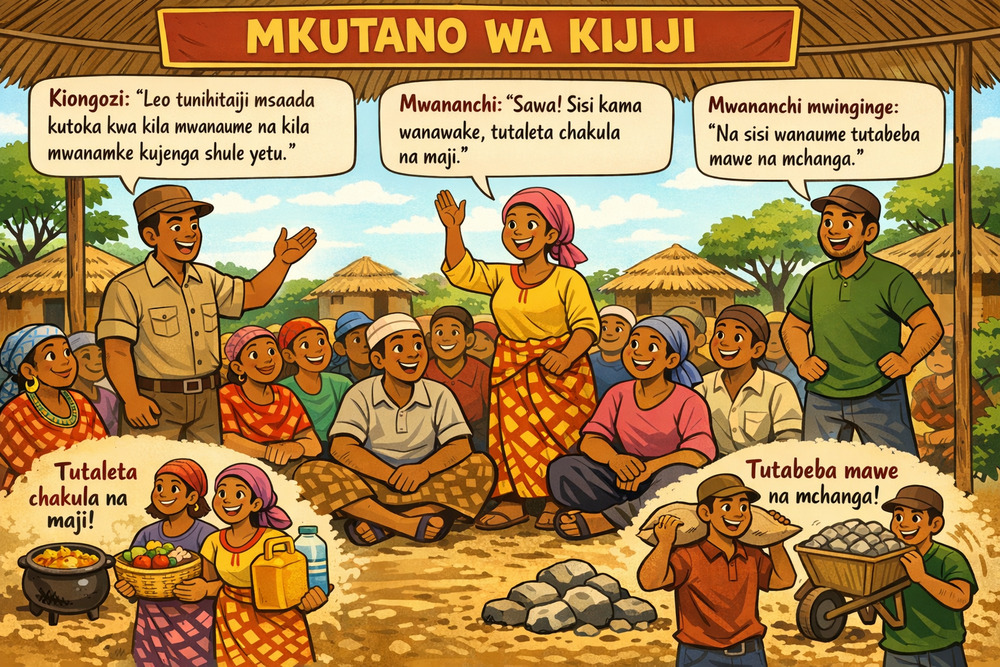
Setting: A Community Meeting (Mkutano wa Kijiji)
Kiongozi: “Leo tunahitaji msaada kutoka kwa kila mwanaume na kila mwanamke kujenga shule yetu.”
Mwananchi: “Sawa! Sisi kama wanawake, tutaleta chakula na maji.”
Mwananchi mwingine: “Na sisi wanaume tutabeba mawe na mchanga.”
2. Heshima ya Mama na Baba (The Honor of Parents)
In East Africa, Mama and Baba are titles of supreme respect. Interestingly, you don’t have to be a biological parent to be called these names. Any man or woman of your parents’ generation is addressed this way.
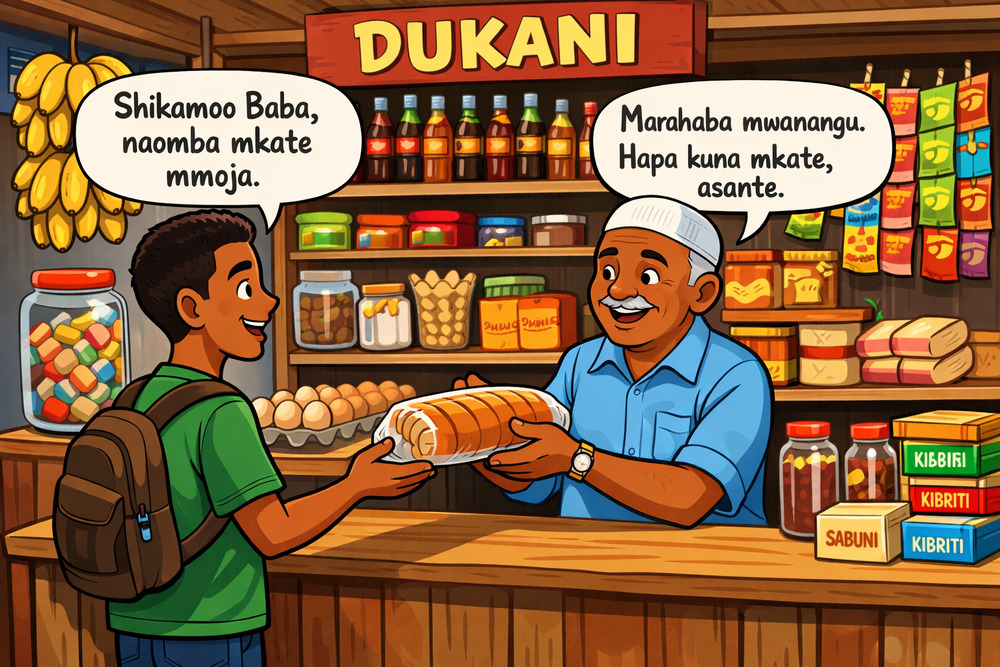
Setting: A Local Shop (Dukani)
Kijana: “Shikamoo Baba, naomba mkate mmoja.”
Muuzaji: “Marahaba mwanangu. Hapa kuna mkate, asante.”
Note: “Shikamoo” is a respectful greeting used for elders. Using it alongside Baba or Mama shows you are well-bred (mwenye adabu).
3. Undugu: Kaka na Dada (The Bond of Siblings)
Kaka (Brother) and Dada (Sister) are perhaps the most used words in daily life. In Swahili culture, a stranger close to your age is your brother or sister. This removes the “stranger danger” and replaces it with a sense of shared responsibility.
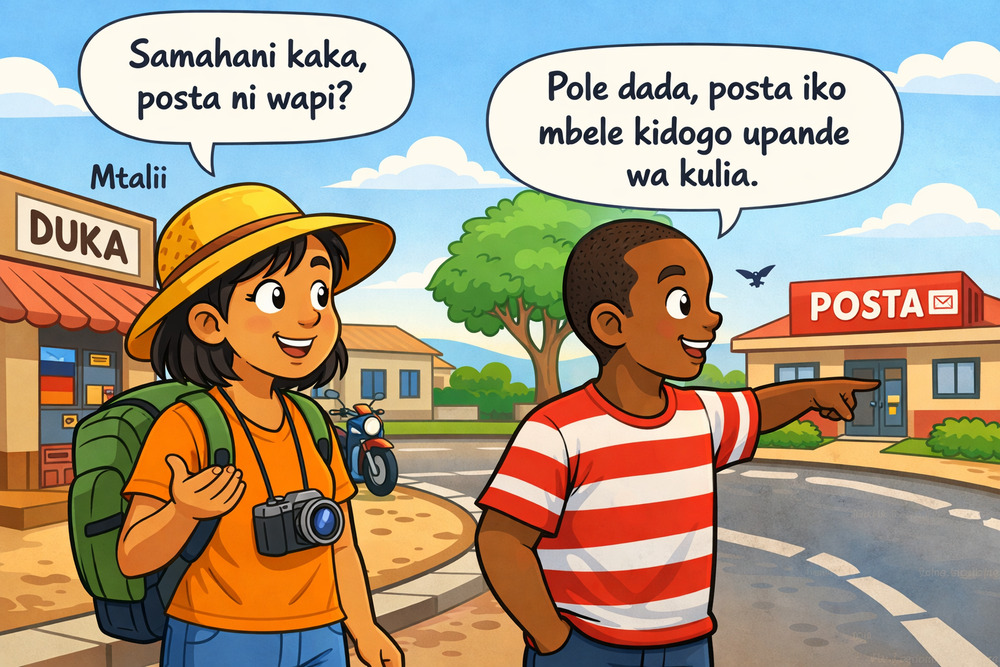
Setting: Asking for Directions
Mtalii: “Samahani kaka, posta ni wapi?”
Mwenyeji: “Pole dada, posta iko mbele kidogo upande wa kulia.”
4. Swahili Social Hierarchy and Titles
Social structure in East Africa is often visualized through these family roles. Even in a business setting, calling a colleague “Kaka” can soften a difficult negotiation.
| Swahili Word | English Translation | Cultural Context |
| Mwanaume | Man | Represents strength and protection. |
| Mwanamke | Woman | Symbolizes the heart and nurturer of the home. |
| Baba | Father | A title for any elder male authority figure. |
| Mama | Mother | The most respected title for any adult woman. |
| Kaka | Brother | Used for peers to establish friendship. |
| Dada | Sister | Used for female peers to show platonic respect. |
5. Conversation in a Family Home (Nyumbani)
To truly see these words in action, let’s look at a typical morning in a Swahili household. Notice how the titles are used instead of names to maintain a hierarchy of love.
Mama: “Dada, umemsaidia kaka yako kuvaa shati?”
Dada: “Ndiyo Mama, nimemsaidia. Lakini Kaka yangu amechukua viatu vyangu!”
Baba: “Acha kelele watoto. Mwanaume hachukui vitu vya dada zao bila ruhusa.”
6. The “Mama Lishe” and “Baba Mdogo” Concepts
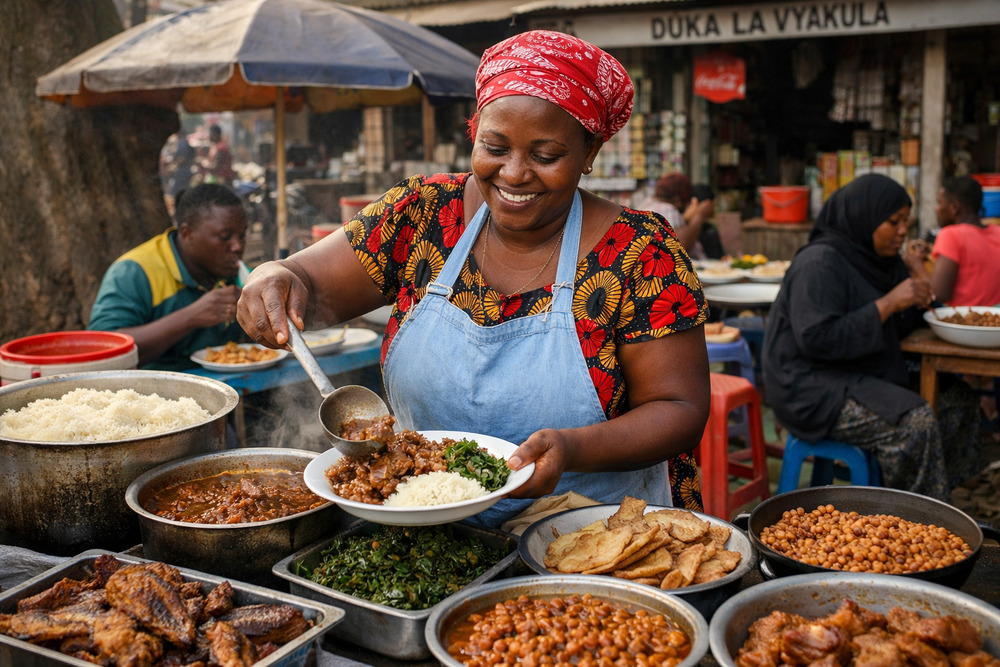
A unique part of the culture involves adding descriptors to these words. A Mama Lishe (Feeding Mother) is a woman who cooks and sells affordable street food. A Baba Mdogo (Small Father) is your father’s younger brother. This demonstrates how the language expands to cover every possible social niche.
Why This Matters for You
Using these words correctly makes you “Mswahili” at heart. It shows you value people over tasks. When you call a female vendor “Mama,” you are telling her, “I see you, I respect you, and I honor your role in society.” This leads to better prices, better service, and genuine smiles.
Swahili is a language of the heart. By mastering Mwanaume, Mwanamke, Baba, Mama, Kaka, and Dada, you aren’t just learning nouns; you are learning how to belong.
We hope you have learn 7 Swahili Family Terms in this article. When you take your time to learn these words, you will be able to use them in your day-to-day activities, and Swahili people will love you for putting in the effort to learn.
We have put links to the audio version for you to learn how they are pronounced. If you need one-on-one practice lessons please contact me using
+255-754-979754(WhatsApp).
Tell us in the comments below what other words you would like to learn. If you want to learn how to say greetings in Swahili, please visit the article about 5 Powerful Ways to Master Swahili Greetings.
Until next time, it’s me, your teacher