

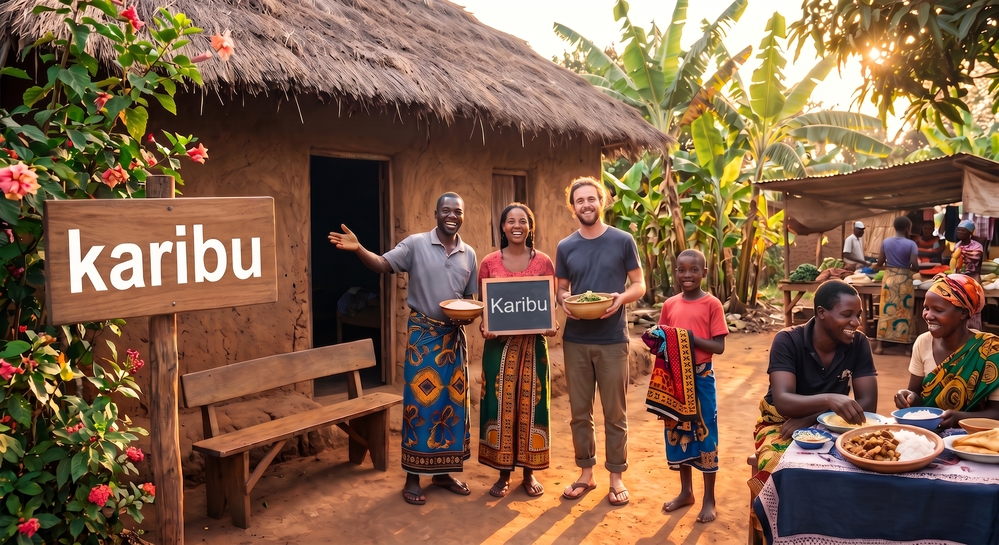
Today we are going to master karibu in 5 Essential Phrases. If you have ever set foot in East Africa or engaged in a conversation with a native Swahili speaker, there is one word you have undoubtedly heard repeated like a warm, rhythmic refrain: Karibu.
At its surface, Karibu translates to “welcome.” But limiting it to a simple polite gesture completely strips it of its heart. In Swahili culture, Karibu is a philosophy in its own right. It is an open door, an unwritten social contract, and an invitation to belong.
The root word karibu literally denotes proximity—nearness in space, time, or human relationship. When expanded into everyday use, it becomes a versatile engine for hospitality, community connection, and practical location mapping.
Table of Contents
Whether you are inviting someone into your living room or describing a relative’s spot near the local marketplace, understanding how to use karibu correctly elevates your Swahili from textbook translation to authentic, soul-deep communication.
In this article, we break down five essential sentences and key phrases that feature this powerhouse word. We will explore why each phrase matters, when and how to deploy it, and exactly how to pronounce it so you sound natural and clear.
Now, let’s see how we can Master Karibu in 5 Essential Phrases.
Master Karibu in 5 Essential Phrases
1. Karibu nyumbani, rafiki yangu
- English Translation: “Welcome home, my friend”
- Pronunciation: Listen to the audio below.👇
Why It Is Important
Home (nyumba) in East African culture is far more than a physical structure built of brick or concrete; it is a sanctuary of comfort, dignity, and family belonging. Saying Karibu nyumbani instantly strips away the stiffness of being a foreign guest and treats the visitor with the warmth reserved for family. It signifies that your doors and your heart are open.
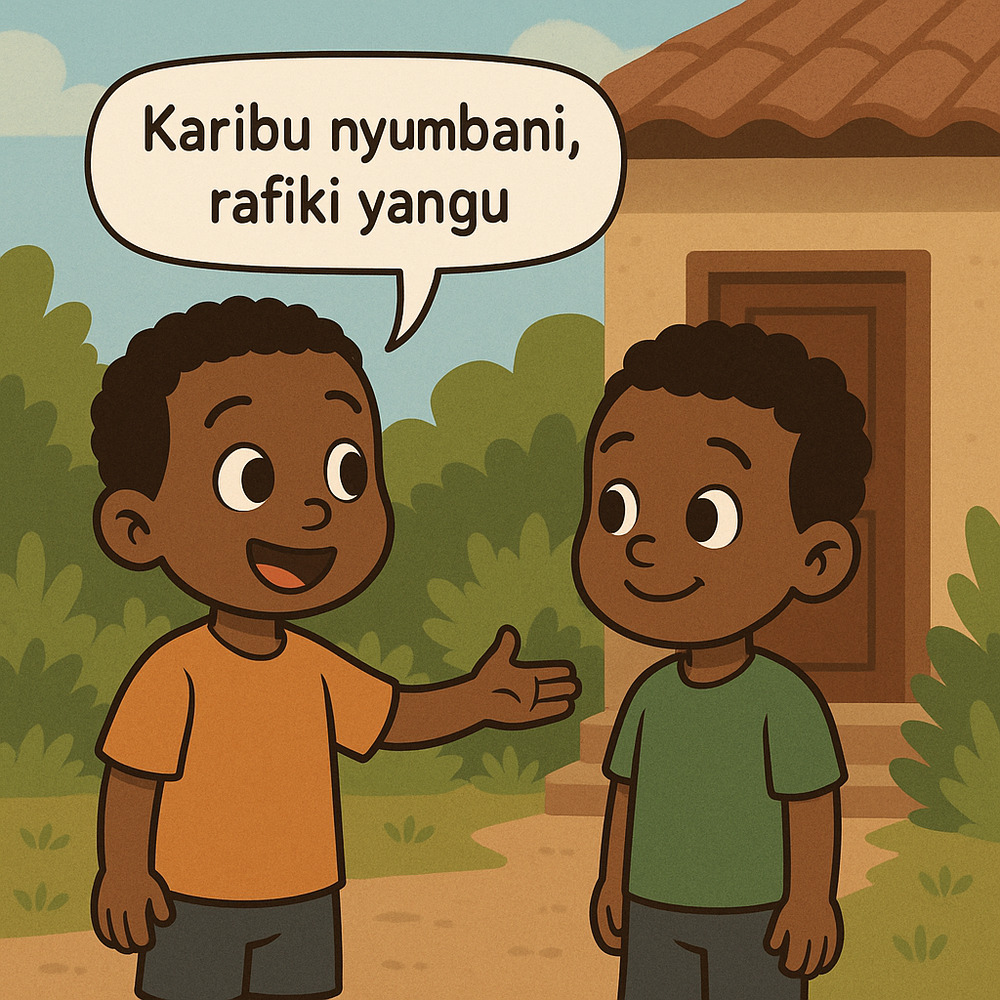
While this specific phrase serves as a relational foundation, combining friendly terms of endearment like Rafiki yangu alongside Karibu creates immediate warmth and establishes genuine trust. Swahili culture thrives on relational connection rather than transactional interactions. Calling someone rafiki yangu shows honor and bridges social distance instantly.
When to Use It
Use this phrase whenever you are welcoming close friends, returning family members, or long-term guests as they arrive at your place of residence.
Use it when introducing a close companion, addressing someone warmly in conversation, or establishing immediate rapport during greetings or street interactions.
How to Use It
Deliver this phrase with a warm smile and open body language right as someone crosses your threshold. If you are welcoming a group of people, adapt the verb to the plural form: “Karibuni nyumbani.”
Attach it directly to your welcoming phrases: “Karibu, rafiki yangu!” (Welcome, my friend!). It instantly transforms a standard greeting into an affectionate, personal connection.
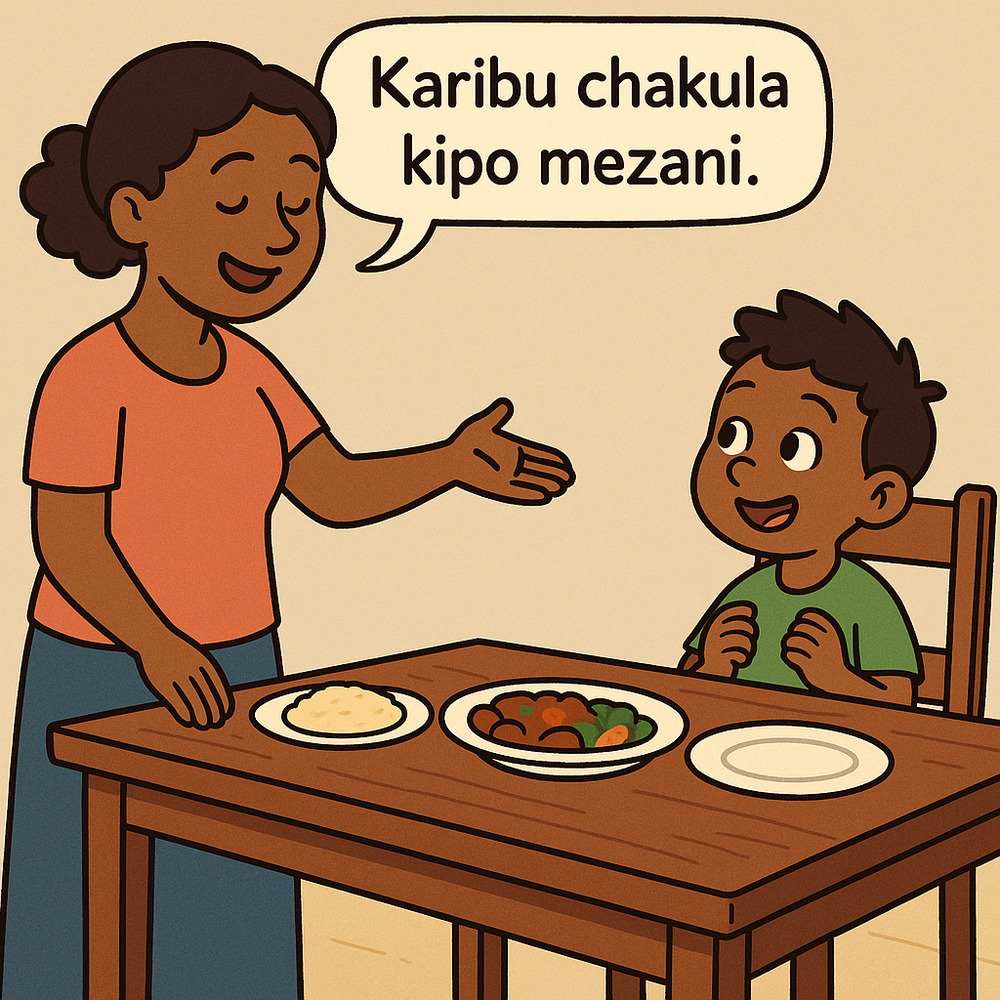
2. Mama alisema: karibu, chakula kipo mezani
- English Translation: “Mother said: Welcome, the food is on the table”
- Pronunciation: Listen to the audio below.👇
Why It Is Important
Food is the universal language of care, and in Swahili households, Mama represents the heart, authority, and nurturing pillar of the home. Offering food is mandatory hospitality—eating in front of someone without offering Karibu chakula (Welcome to food) is considered deeply disrespectful in East African custom. This sentence reflects respect for the mother’s household authority while extending unconditional warmth to guests.
When to Use It
Use this phrase when relaying a mealtime invitation from the host or mother of the house, or when calling family and visitors to gather around the dinner table.
How to Use It
Say it aloud as the meal is being set down or once everyone has gathered near the dining area. It serves as a gentle, respectful green light that the meal is ready for everyone to share together.
3. Karibu uje ukae hapa nami
- English Translation: “You are welcome to come and sit here with me”
- Pronunciation: Listen to the audio below.👇
Why It Is Important
This phrase highlights the core values of communal living and shared presence. It active counters isolation and social awkwardness. By explicitly asking someone to come sit next to you, you signal that their presence is valued and that they belong in the room.
When to Use It
Use this when you see an acquaintance, colleague, or guest standing alone, arriving at a social gathering, or searching for a place to sit in a room or outdoor gathering.

How to Use It
Gesture welcomingly toward the open chair or space beside you as you say the words. It creates an immediate sense of comfort and breaks down social hesitation.
4. Ndugu yangu anaishi karibu na sokoni
- English Translation: “My relative/brother lives near the market”
- Pronunciation: Listen to the audio below.👇
Why It Is Important
Here, karibu shifts from a social expression of welcome to its literal spatial definition: “near” or “close to”. Mastering this dual functionality is crucial for navigating daily Swahili conversations, giving directions, and establishing geographic context. Additionally, using ndugu (relative/brother/sister) reflects the deeply connected social structure of East African life.
When to Use It
Use this sentence when giving directions, explaining where family members reside, or providing context during conversational storytelling.

How to Use It
Use the formula karibu na + [landmark] whenever you want to express spatial proximity (e.g., karibu na sokoni = near the market; karibu na shule = near the school).
Now Let’s Bring It All Together
Language is far more than grammar; it is a mirror reflecting cultural soul. In Swahili, karibu is the pulse of daily human connection. Whether you are opening your home with Karibu nyumbani, sharing a meal with Karibu chakula, inviting someone into your space with Karibu uje ukae hapa nami, or describing a home karibu na sokoni, you are speaking the timeless language of East African hospitality.
Practice these phrases aloud, embrace the natural rhythm of the second-to-last syllable, and watch how quickly doors and hearts open whenever you speak.
We hope this Master Karibu in 5 Essential Phrases in Swahili will help you add to your vocabulary. You can also learn another 5 Inspiring Swahili Introductions.
Please let us know which Swahili phrases you know in the comments section below. We would love to hear from you. 👇
Please reach out to me by clicking my initials below.👇To learn more in private.
Until next time, Happy Learning.